Consultation & Assessment
Your first appointment runs up to an hour. A full case history, then an examination of how your whole body moves and compensates, ending in a working diagnosis explained in plain terms before any treatment begins.
Most non-traumatic knee pain: runner’s knee, patellar tendon issues, and load-related aches, comes from how the whole leg loads the joint, not just the knee itself. Yousif Barr assesses the hip, knee, and ankle together at the Soho clinic, treats the pain hands-on, and builds the strength that keeps you moving.

Overview
Knee pain is one of the most common lower-limb complaints, and in active adults the majority is non-traumatic: driven by training load, strength deficits, and how the hip and ankle control the leg, rather than damage inside the joint itself. That is why osteopathy assesses the whole leg. The knee is often where the pain lands, not where the problem starts.
The most frequent presentations are:
NICE and NHS guidance favour exercise-based management and staying active over early scans or surgery for most non-traumatic knee pain. Yousif combines hands-on osteopathic treatment to ease symptoms and restore movement with a progressive strength programme for the hip, knee, and ankle that addresses what is actually loading the joint. Because the driver so often sits above or below the knee, the Full Body MOT screens how the whole lower limb loads and compensates. The aim is not just less pain but a leg strong and well-controlled enough to keep running and training without it returning, much as with any sports injury.
Excellent
From 5 five-star Google reviews
Source: Google
Yousif is an outstanding osteopath and a wonderful person. I came to him with tingling and burning in my fingers due to long stretches at my computer and he was able to provide relief within the first session. I’ve had a handful of sessions since and my symptoms have improved drastically. He’s also advised me on prevention and his advice has hugely helpful. He is a very calming presence and has a kind demeanour. I cannot recommend his services enough - he is excellent at his craft.
Yousif has been incredible in helping me with sciatica pain. He explained the issues I had been experiencing in a clear manner and provided me with relief in a short amount of time. I had struggled to find an osteopath for years who could pay attention to my specific concerns. Would highly recommend!
Yousif has treated me for lower back pain following a herniated disc. He is professional, respectful and has helped me significantly through treatment. I would highly recommend his practise.
I visited YB Osteopathy for neck and shoulder pain and the results have been extremely good. Dr Yousif Barr treatment significantly improved my pain and mobility in just a few sessions. I highly recommend it.
Excellent osteopath, helped massively with my neck pain and headache. An absolute life saver, can’t recommend him enough
Hands-on treatment settles symptoms and restores comfortable movement around the knee, hip, and ankle, so walking, stairs, and training feel manageable while the strength work takes effect. Calming the symptoms early also makes it far easier to stay consistent with the rehab that follows.
Most knee pain without an injury comes from how the whole leg loads the joint. Yousif assesses the hip, knee, and ankle together, looking at strength, control, and mobility across the chain, so treatment targets what is actually driving the pain rather than just where it lands.
Load-related knee pain rarely needs complete rest. Reducing volume, swapping high-impact sessions for low-impact ones, and adding targeted strength work usually beats stopping altogether, which only causes deconditioning. Yousif tells you what to keep, what to modify, and when to build back up.
Hip and glute strength deficits let the knee fall inward under load, and reduced ankle mobility shifts work up to it. A progressive strength programme for the whole leg addresses those upstream factors, which is what protects the knee long after the current episode has settled.
For most knee pain without an injury, clinical assessment guides management better than early imaging, which often shows age-related changes present in pain-free people too. Scans earn their place after significant trauma, with locking or giving-way, or when symptoms persist beyond a proper rehab trial.
Patellar tendon issues respond to progressive loading, but they respond slowly, and rushing the process is the classic way to restart it. Yousif structures the loading over the weeks it genuinely takes, progressing against how the tendon responds rather than against the calendar.
Why it happens
Training-load spike: a sudden increase in running, cycling, or gym volume
Hip and glute strength deficits that let the knee fall inward under load
Patellofemoral (kneecap) tracking and load issues: runner’s knee
Patellar tendinopathy from repetitive jumping or loading
Reduced ankle mobility shifting load up to the knee
Deconditioning or returning to activity after time off or surgery

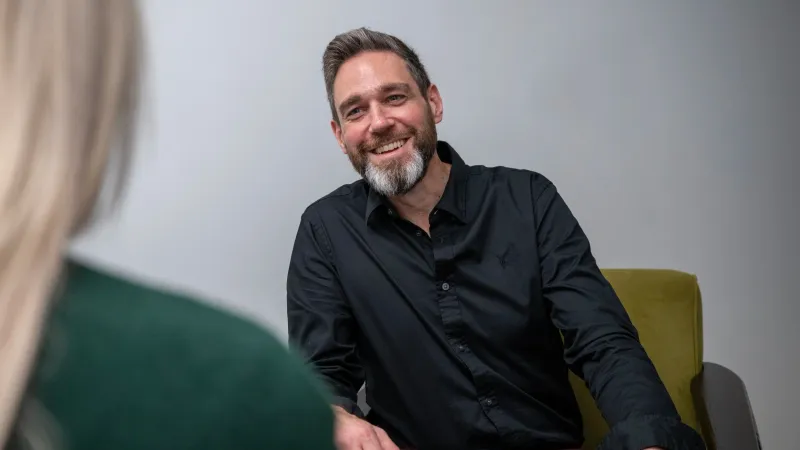
Allow up to an hour. Yousif takes a full history covering your health, medications, injuries, work, and lifestyle, then examines how your whole body moves and where it compensates.
He explains the working diagnosis in plain terms before any hands-on work begins, and treatment starts in the same visit. You leave with a plan you understand.
A pain-free life, treated as a whole. Yousif looks past the site of the pain to how the whole body moves and compensates, then treats the cause so the relief holds.


YB Osteopathy is a private, self-funding practice, and no GP referral is needed to book. Enquire by email or phone and Yousif will arrange your first appointment.
The arc is simple: relieve, realign, rebuild. Yousif finds what is driving the pain, treats it by hand, and gives you a plan and the habits that stop it returning.
Your first appointment runs up to an hour. A full case history, then an examination of how your whole body moves and compensates, ending in a working diagnosis explained in plain terms before any treatment begins.

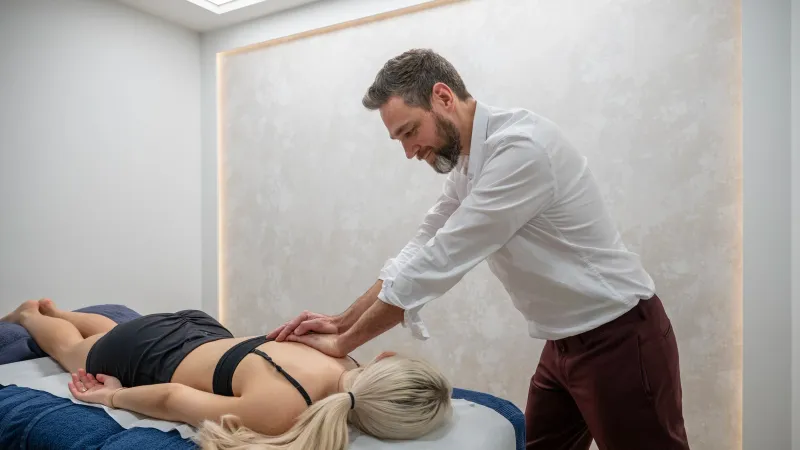
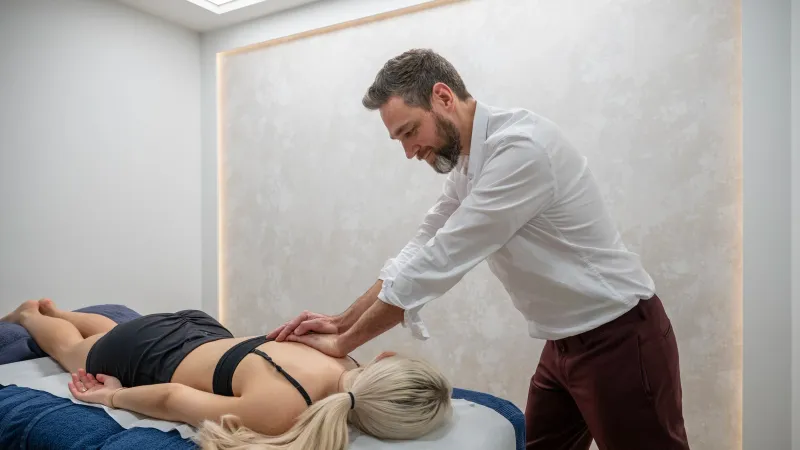
Gentle, tailored osteopathic treatment: soft-tissue work, joint articulation and mobilisation, and postural correction chosen for your presentation. Your comfort is the priority throughout, because the more at ease you are, the better you respond.

You leave with a clear plan covering your diagnosis, your prognosis, and exercises to use between visits. Follow-up appointments are 30 minutes and reassess your progress against the baseline.

The movement, habits, and desk-side changes that keep the problem from rebuilding. Where something falls outside osteopathic care, Yousif refers quickly through the in-house network at UNTIL: the right help at the right time.

Treatment approach
Hands-on treatment to ease pain and restore movement, combined with a progressive strength programme for the hip, knee, and ankle, is the core approach for non-traumatic knee pain: addressing the load and control issues driving it.
See treatment detail →Knee pain is often driven from the hip and ankle. The Full Body MOT screens how the whole lower limb loads and compensates, identifying the upstream factors a knee-only approach can miss.
See treatment detail →FAQ
For most non-traumatic knee pain, no. Clinical assessment guides management better than early imaging, which often shows age-related changes present in pain-free people too. Scans become appropriate after significant trauma, with locking or giving-way, or when symptoms persist beyond a proper rehab trial. Start with an assessment of how the whole leg moves.
Load-related knee pain: like runner’s knee, typically appears when the demand exceeds what the joint and surrounding muscles can currently handle, often after a training increase. It frequently traces back to hip and glute strength or ankle mobility rather than the knee itself, which is why assessing the whole leg matters.
Rarely complete rest. Modifying your training: reducing volume, swapping high-impact for low-impact, and adding targeted strength work, usually beats stopping altogether, which causes deconditioning and delays return. Yousif will tell you what to keep doing, what to modify, and how to build the strength that protects the knee.
Load-related knee pain often improves over several weeks once training is managed and the right strength work begins, though tendon problems can take longer. The goal is not just less pain but a leg strong and well-controlled enough to handle running, training, or daily demands without the pain returning.
Get Started
YB Osteopathy • UNTIL, 111 Charing Cross Road, London WC2H 0DT
BookAppointments typically available within 1–2 weeks