Consultation & Assessment
Your first appointment runs up to an hour. A full case history, then an examination of how your whole body moves and compensates, ending in a working diagnosis explained in plain terms before any treatment begins.
Rotator-cuff problems, impingement-pattern pain, and frozen shoulder respond well to hands-on treatment paired with graded loading, and most cases settle without surgery when care starts early. The longer a stiff or painful shoulder is left, the more range it loses, so Yousif Barr helps you start sooner from the Soho clinic.

Overview
Shoulder pain is one of the most common musculoskeletal complaints in UK primary care, and in most people over 40 the source is the rotator cuff: the four small muscles that stabilise the joint. Because the shoulder depends on the neck, upper back, and shoulder blade all working together, osteopathy assesses the whole region rather than the joint alone.
Most non-traumatic shoulder pain falls into a few groups:
Current evidence supports progressive loading as the primary treatment for rotator-cuff and most non-traumatic shoulder pain, with hands-on work supporting the active programme. Yousif combines hands-on osteopathic treatment to ease pain and protect range with a loading plan that rebuilds the cuff, and manages frozen shoulder appropriately through each phase. Because the neck and upper back are so often part of the picture in desk workers, the Full Body MOT screens the whole upper-body chain so the rehab targets the right structures. Starting early matters: the longer a stiff or painful shoulder is left, the more range it loses.
Excellent
From 5 five-star Google reviews
Source: Google
Yousif is an outstanding osteopath and a wonderful person. I came to him with tingling and burning in my fingers due to long stretches at my computer and he was able to provide relief within the first session. I’ve had a handful of sessions since and my symptoms have improved drastically. He’s also advised me on prevention and his advice has hugely helpful. He is a very calming presence and has a kind demeanour. I cannot recommend his services enough - he is excellent at his craft.
Yousif has been incredible in helping me with sciatica pain. He explained the issues I had been experiencing in a clear manner and provided me with relief in a short amount of time. I had struggled to find an osteopath for years who could pay attention to my specific concerns. Would highly recommend!
Yousif has treated me for lower back pain following a herniated disc. He is professional, respectful and has helped me significantly through treatment. I would highly recommend his practise.
I visited YB Osteopathy for neck and shoulder pain and the results have been extremely good. Dr Yousif Barr treatment significantly improved my pain and mobility in just a few sessions. I highly recommend it.
Excellent osteopath, helped massively with my neck pain and headache. An absolute life saver, can’t recommend him enough
Hands-on treatment eases pain and keeps the shoulder moving while the underlying problem is addressed. The longer a stiff or painful shoulder is left, the more range it loses, so starting early matters: it is far easier to keep movement than to win it back months later.
Progressive loading is the primary treatment for rotator-cuff and impingement-pattern shoulder pain, with hands-on work supporting the active programme. Yousif builds the loading up gradually, session by session, until the cuff can handle your training, your job, and everything you lift overhead without complaint.
Most rotator-cuff problems without a major injury respond to a structured rehab programme over a few months. Surgery is reserved for traumatic full-thickness tears or persistent, disabling symptoms after a proper trial of loading, and Yousif refers on promptly when your presentation genuinely calls for a surgical opinion.
Frozen shoulder moves through freezing, frozen, and thawing phases, and the right care differs in each. Treatment reduces pain and preserves as much movement as possible throughout: gentle in the painful early phase, with mobility work increased gradually and steadily as the shoulder begins to thaw.
In desk-based workers, the neck, upper back, and shoulder-blade control are usually part of the picture. Assessing the whole upper-body chain shows where the shoulder is being overloaded, so treatment and rehab target the real contributors rather than only the joint that happens to hurt.
After a dislocation or a training injury, recurrence rates are high without proper rehabilitation. A progressive programme covering range of motion, then strength, then sport-specific loading gives the best outcome, and Yousif guides the return so the shoulder is genuinely ready before it is tested again.
Why it happens
Rotator-cuff tendinopathy from repetitive overhead loading or a training spike
Subacromial impingement: pinching of cuff tissue under the acromion
Frozen shoulder (adhesive capsulitis): often spontaneous, common in the 40–60 age group
Acromioclavicular (AC) joint sprain or arthrosis
Postural and scapular control issues amplifying any of the above
Acute trauma: falls, sporting collisions, dislocations

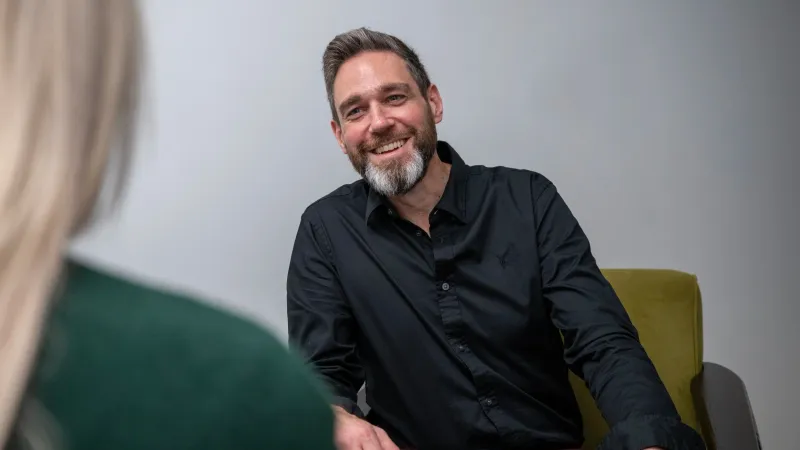
Allow up to an hour. Yousif takes a full history covering your health, medications, injuries, work, and lifestyle, then examines how your whole body moves and where it compensates.
He explains the working diagnosis in plain terms before any hands-on work begins, and treatment starts in the same visit. You leave with a plan you understand.
A pain-free life, treated as a whole. Yousif looks past the site of the pain to how the whole body moves and compensates, then treats the cause so the relief holds.


YB Osteopathy is a private, self-funding practice, and no GP referral is needed to book. Enquire by email or phone and Yousif will arrange your first appointment.
The arc is simple: relieve, realign, rebuild. Yousif finds what is driving the pain, treats it by hand, and gives you a plan and the habits that stop it returning.
Your first appointment runs up to an hour. A full case history, then an examination of how your whole body moves and compensates, ending in a working diagnosis explained in plain terms before any treatment begins.

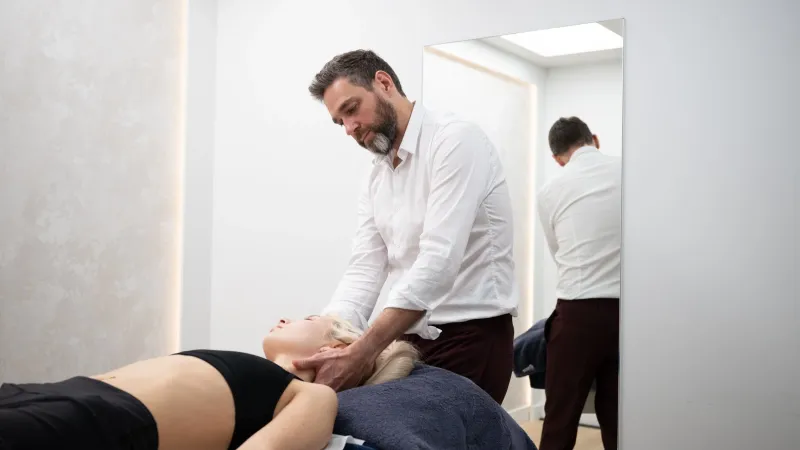
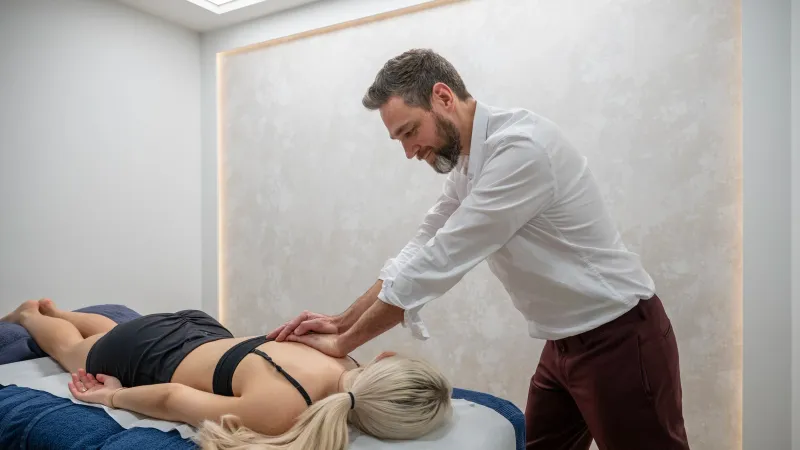
Gentle, tailored osteopathic treatment: soft-tissue work, joint articulation and mobilisation, and postural correction chosen for your presentation. Your comfort is the priority throughout, because the more at ease you are, the better you respond.

You leave with a clear plan covering your diagnosis, your prognosis, and exercises to use between visits. Follow-up appointments are 30 minutes and reassess your progress against the baseline.

The movement, habits, and desk-side changes that keep the problem from rebuilding. Where something falls outside osteopathic care, Yousif refers quickly through the in-house network at UNTIL: the right help at the right time.

Treatment approach
Hands-on treatment to restore movement and ease pain, combined with a progressive loading programme, is the evidence-based approach for rotator-cuff and impingement-pattern shoulder pain. Frozen shoulder is managed through each of its phases.
See treatment detail →For shoulder pain in desk workers, the neck, upper back, and scapular control are usually contributors. The Full Body MOT screens the whole upper-body chain so the rehab targets the right structures.
See treatment detail →FAQ
Usually not as a first step. Shoulder MRI frequently shows partial-thickness rotator-cuff changes that are present in pain-free people too, so it rarely changes early management. Imaging becomes appropriate when symptoms persist beyond a proper rehab trial, after significant trauma, or when surgery is being considered. Start with a clinical assessment.
Most non-traumatic rotator-cuff problems do not need surgery first. Structured progressive loading is the recommended starting point, and many degenerative cuff issues respond to a rehab programme over a few months. Surgery is reserved for traumatic full-thickness tears or persistent disabling symptoms after rehab. Yousif will refer on if your presentation calls for it.
Frozen shoulder moves through freezing, frozen, and thawing phases and can take many months to a couple of years overall. Treatment through each phase reduces pain and maintains as much movement as possible. Aggressive stretching during the painful freezing phase is avoided; mobility work is increased gradually as the pain settles.
Yes, and rehab should be a priority: recurrence rates are high in younger patients without it. Strong rotator-cuff and scapular stabilisers significantly reduce the chance of another dislocation. A progressive programme covering range of motion, then strength, then sport- or work-specific loading gives the best outcome. Start within a few weeks of the event where possible.
Get Started
YB Osteopathy • UNTIL, 111 Charing Cross Road, London WC2H 0DT
BookAppointments typically available within 1–2 weeks